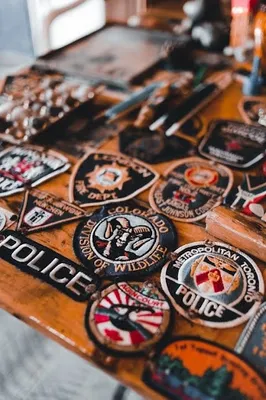
Denim Jacket Patch Placement: Where Should You Put Each Patch?
Denim jacket patch placement starts with one habit we see in every jacket customers photograph for us. The finished ones share it. The messy ones don't. Place the biggest patch first, then answer it with everything else. In this guide, we cover jean jacket patch placement by size, sleeve and pocket rules, and a layout test.

Key Takeaways
- Place the biggest patch first and treat every other patch as a response to it, so the composition reads as one arrangement instead of a pile.
- The center back panel takes large patches, sleeves and front panels take medium, and chest pockets, collar, and cuffs take small designs or narrow strips only.
- Avoid elbows, cuff edges, pocket openings, and front placket folds for stiff or iron-on patches, because those zones abrade and lift first on denim.
- We supply high-quality custom patches for denim jackets from 2 to 12 inches, in the shape, backing, and border you need, with generous bulk discounts on team runs.
Table of contents
-
Denim Jacket Patch Placement
-
How Should You Arrange Multiple Patches On A Denim Jacket?
-
Where Should You Put Patches On The Front Of A Jean Jacket?
-
Should Patches Go On The Sleeves Or Shoulders Of A Denim Jacket?
-
Should Jean Patches Go On The Inside Or Outside?
-
Does It Matter Which Side Of A Denim Jacket You Put A Patch On?
-
Why Does Denim Jacket Patch Placement Matter?
-
How Should You Plan Denim Jacket Patch Placement Before Attaching Them?
Denim Jacket Patch Placement
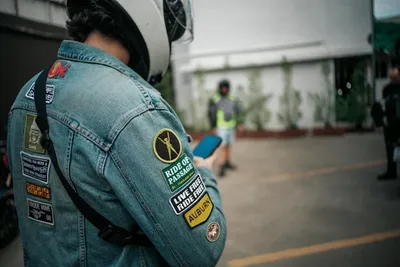
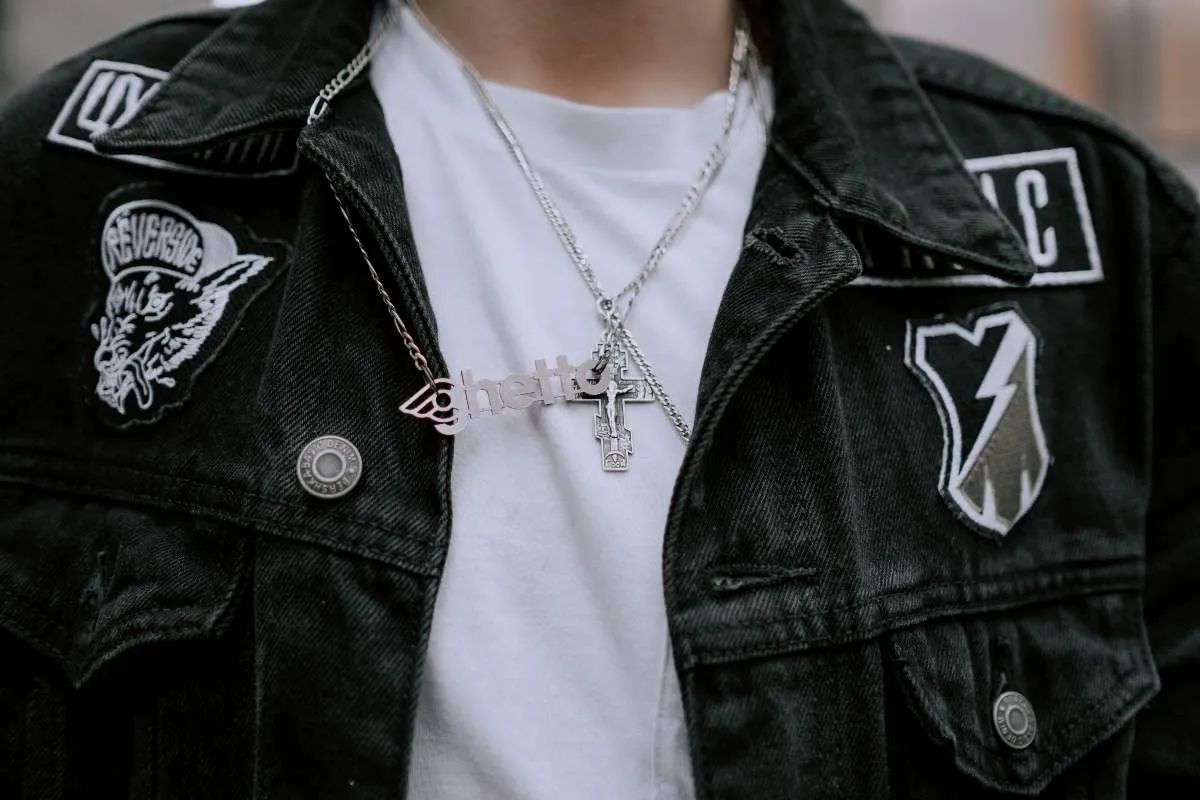
The best denim jacket patch placement puts the largest design on the center back panel first, then arranges every other patch around it. In the jackets customers send us photos of, the finished ones share that habit. The center back is the widest flat panel and the one the eye lands on when you walk away. Give it the piece you care about most, and the rest of the composition builds itself.
The main placement zones are the back panel, chest pockets, front panels, sleeves, shoulders, collar, and cuffs. Each zone has a natural size range and its own trade-offs. A patch that fits the zone reads as intentional; a patch that fights the zone reads as a mistake, even when the design itself is good.
We've found the mistakes cluster in three shapes. A patch is too large for the zone and crosses a seam. A patch sits on a bending zone like the elbow and lifts at the corner. Or a design is placed by symmetry to a pocket or hem that's not actually symmetric, so it reads off by a quarter inch. All three are avoidable at the layout stage.
Where Should Patches Go On A Denim Jacket Based On Their Size?
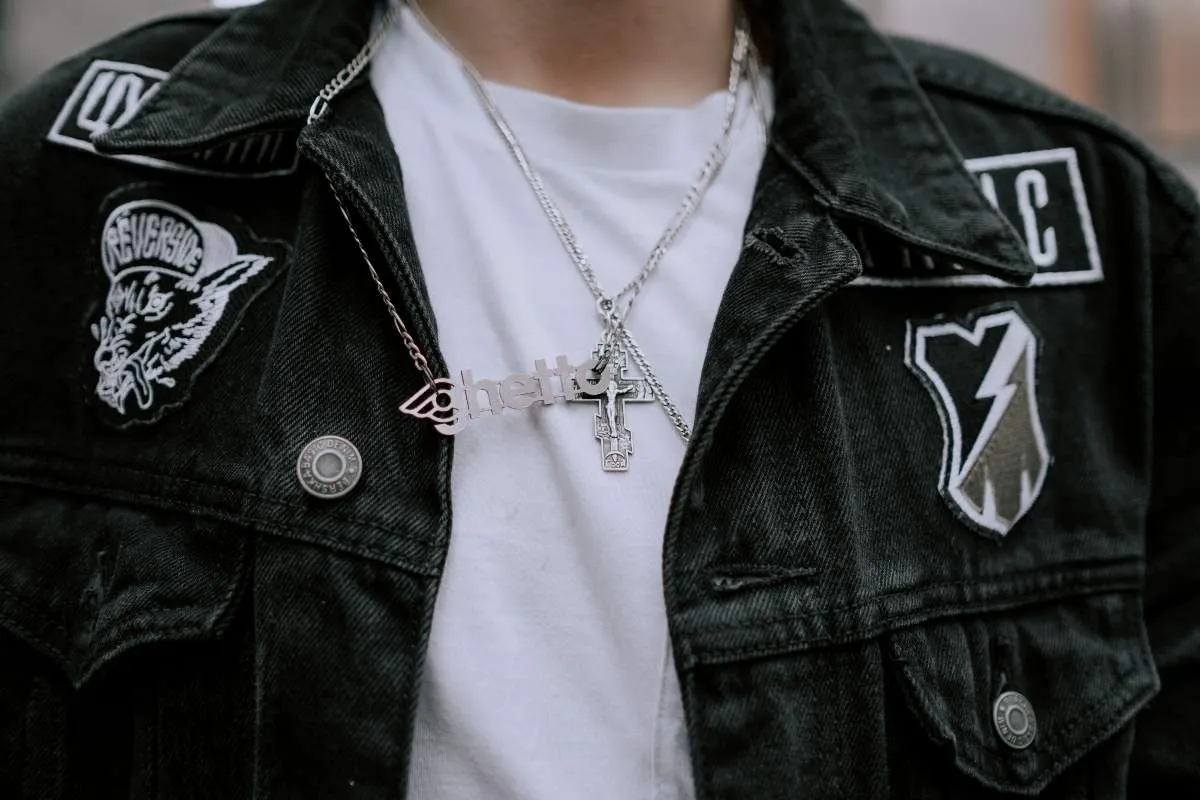
Match the patch size to the zone, not the zone to the design. The rule we use in our production notes: big goes back, medium goes sleeve or front panel, small goes pocket or collar. On many adult men's denim jackets, the center back panel measures roughly 12 to 14 inches wide between side seams, so it accepts a 6 to 12 inch patch on most builds. Measure your own before you commit; panel width shifts with brand, size, and cut.
| Patch size | Best zones | Zones to avoid | Attach with |
|---|---|---|---|
| 2 to 3 inches | Chest pocket, collar, front panel | Elbow, cuff edge | Sew-on, iron-on |
| 3 to 5 inches | Sleeve, shoulder, front panel | Cuff, elbow crease | Sew-on preferred |
| 6 to 12 inches | Back panel, large front panel | Anywhere it crosses a seam or fold | Sew-on preferred |
| Narrow strips | Cuff, collar, shoulder yoke | Elbow | Sew-on preferred |
Work with us to create custom patches for jackets from 2 to 12 inches, cut to the shape your jacket panel actually needs.
How Should You Arrange Multiple Patches On A Denim Jacket?
Arrange multiple patches by picking one focal patch and stepping down from there. A common working set is one large back patch, two or three medium sleeve or front-panel patches, and a handful of small collar or pocket pieces. Vary the sizes so the eye has somewhere to rest. A jacket covered in same-size patches reads as busy rather than curated.
Leave visible denim between patches. A rule of thumb from the layouts our customers photograph: keep at least one inch of open denim around every patch. That gap gives each piece room to be read on its own and keeps the jacket from looking upholstered.
Should You Group Denim Jacket Patches Together Or Spread Them Out?
Group patches when they belong to the same collection, and spread them when each patch is its own statement. A show run, a tour, or a Scouting collection reads well in a tight cluster on the back panel or a front panel because the story is the collection itself. A single band patch, a name tag, and a favorite symbol read better spaced across the jacket because each one earns its own moment.
Test the arrangement before you commit. Lay the jacket flat, place every patch without attaching, photograph it, then move things until the photo looks right. For a longer read on this workflow, see our put patches on a denim jacket guide.
Want the biggest patch on your denim jacket to actually fit?
Work with us to create custom patches for jackets, sized from 2 to 12 inches, in the shape and construction your denim panel actually needs.
Where Should You Put Patches On The Front Of A Jean Jacket?
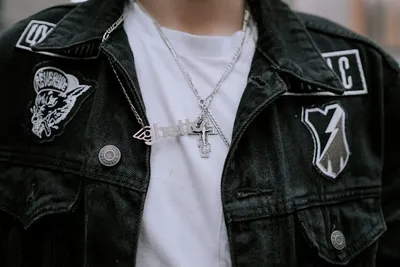
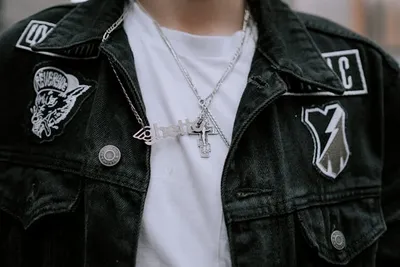
Put front patches on the chest pockets and the front panels below the pockets. These are the zones most visible when the jacket is worn open, and they read from across a room. Small badges land on the pockets. Medium patches sit on the flat front panels between the pocket and the hem. Very small designs can sit on the pocket flap itself.
Avoid the button placket fold if the patch is stiff. That vertical line down the front of the jacket flexes every time the jacket opens, and an iron-on or thick embroidered patch across it is likely to lift at the fold within a few wears.
Should You Put Patches On Chest Pockets Or Front Panels?
Chest pockets suit logos, monograms, and small badges. On most adult jackets the pocket is roughly 3 to 4 inches wide; measure the usable area inside the flap and clear the button hardware before choosing a size. Sit the patch above, on, or beside the pocket, but leave the opening clear. Work with us for custom monogram patches sized to standard chest-pocket panels.
Use front panels below the pocket for larger designs. On many jackets the flat panel between the pocket and the hem takes a 4 to 5 inch patch, but check the narrowest seam-free width first because taper and hem length vary. Match left and right for symmetry, or offset one side with a smaller cluster for intentional asymmetry.
Need small monograms for the chest pocket or collar?
We produce custom monogram patches with fine lettering that reads at arm's length, in embroidered or woven construction to suit denim.
Learn moreShould Patches Go On The Sleeves Or Shoulders Of A Denim Jacket?
Yes, sleeves and shoulders are strong placements, but they come with a movement warning. The upper sleeve, from the shoulder seam to about elbow height, is a flat panel that faces sideways when the arms are down, so patches there read from the profile view. Arrange several vertically for a utility or scout-inspired look.
Don't place stiff patches across the elbow crease itself. The elbow bends constantly, which fatigues the border. In the returns we see, elbow patches are the most common failure by far, especially iron-on. The forearm below the crease is flatter and can take a flexible sewn patch, but skip iron-on there since the sleeve rubs against everything.
Where Should You Place Patches On The Collar, Hood Or Cuffs?
Small symbols work on the collar; narrow strips work on the cuff; hoods only exist on some jackets. A collar patch is small and rides on a folded edge, so keep the design simple and legible at conversation distance rather than packing in fine detail that no one will get close enough to read. A cuff patch has to be narrow enough not to hit the button opening. Skip the hood section entirely if your jacket has no hood, which is most classic denim jackets.
Choose a flexible construction for these zones. Thin woven or small embroidered patches hold up better than stiff ones; PVC and heavy chenille are usually too rigid for a cuff or collar to fold naturally.
Should Jean Patches Go On The Inside Or Outside?
Outside for decoration, inside for repair. A decorative patch is meant to be seen, so it lives on the outside where the design does its job. A repair or reinforcement patch usually lives on the inside, hidden behind a worn spot, where a plain twill patch sits behind the fabric and reinforces the thin denim from below.
A hybrid also works. For a hole in a visible spot, place a plain reinforcement patch inside and a decorative patch outside covering the same spot. The reinforcement carries the load and the decoration carries the look. For a longer read, see our custom patches for jeans options.
What Are The Best Uses For Inside And Outside Jacket Patches?
Outside patches suit visible decoration, large repairs, and focal designs. Anything meant to signal identity or complete a look goes here: band patches, club patches, monograms, statement pieces. A large decorative patch can also cover a stain or bleach mark, so the repair reads as a design choice.
Inside patches suit hidden repairs and reinforcement. A plain iron-on inside a worn cuff or elbow doubles the fabric behind the wear spot and can add real wear life to the garment, though exactly how much depends on remaining fabric strength, laundering, and continued abrasion. Check the inside patch does not scratch the skin, especially at the wrist and neckline.
Layout still in flux and want to move patches around?
Our custom Velcro patches let you test placements on your jacket without commitment, then commit to a final layout when you like it.
Does It Matter Which Side Of A Denim Jacket You Put A Patch On?
Casual denim has no left or right rule; uniforms and organizations do. On a personal denim jacket, choose the side by pocket layout, existing seams, and the visual weight of other patches. On uniformed gear, follow the publishing body's placement standards.
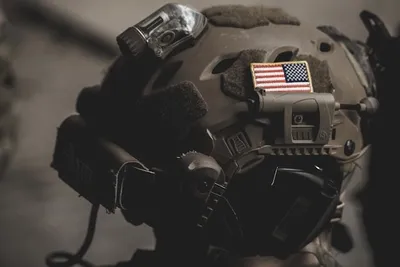
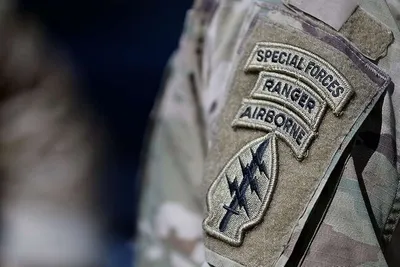
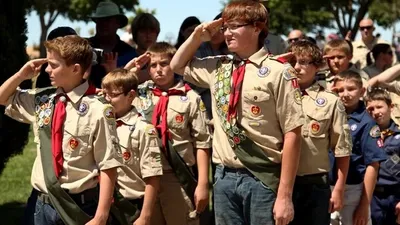
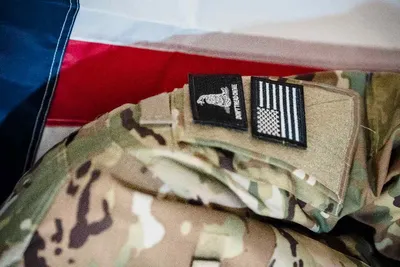
For Scouting placements, see Scouting America's insignia guide, which specifies which sleeve carries which patch and gives precise position rules (some to the inch, others measured from pockets or seams). Current Army uniform standards place the U.S. flag insignia on the right shoulder pocket flap of utility uniforms, on the upper part of the hook-and-loop pad, star field facing forward. General federal flag-display guidance lives in the U.S. Flag Code, separate from these uniform rules.
How Can You Balance Patches Across Both Sides Of A Jacket?
Balance visual weight, not patch count. One large patch on the left balances two or three small ones on the right, because visual weight mixes size, color, and detail. The Smithsonian Learning Lab's balance and symmetry collection frames three options: symmetrical, radial, and asymmetrical. Denim jackets already carry symmetric structure in the pockets and seams, so an asymmetrical patch layout often reads well on top of it, though other approaches work too.
Anchor to the jacket's existing lines. The pockets, seams, and button line are already symmetric; use them as reference points. Leave open denim visible so the jacket still reads as denim underneath the patches, not as a wall of embroidery. As a starting point on the layouts we make patches for, aim to keep roughly a third of the jacket area bare, then tighten or loosen the spacing to suit the look you want.

Repairing a worn denim jacket rather than decorating it?
Get started with custom patches for jeans, sized and backed for the elbows, cuffs, and pocket edges that wear through first on denim.
Get startedWhy Does Denim Jacket Patch Placement Matter?
Placement decides whether the jacket looks planned or thrown together. The same set of patches can look sharp on one wearer and messy on another based on placement alone. Placement also affects durability (a patch in a bending zone fails faster than one on a flat panel) and comfort (a stiff patch under the arm catches on other gear).
Prominent zones deserve the patches that matter most to you. Save the back panel and chest pocket for pieces you want to keep for years. Use hook-and-loop on any zone you expect to update, so the base fabric stays undamaged when designs change.
Which Areas Of A Denim Jacket Should You Avoid For Patches?
Avoid elbows, cuff edges, front placket folds, and pocket openings. These are the friction zones on a denim jacket. The elbow flexes constantly during wear; the cuff drags across desks, tables, and door handles; the front placket folds every open-and-close; pocket openings catch on hands and phones.
For anything that has to go in a friction zone, choose a thin, flexible construction (small embroidered, thin woven), skip iron-on, and reinforce the border with a row of stitching. For attachment help, our sew on a patch guide covers the basic border stitch.

How Should You Plan Denim Jacket Patch Placement Before Attaching Them?
Lay the jacket flat, place the biggest patch first, then work outward. A dining table or a clean floor gives you the room to see the whole layout at once. Place every patch without adhesive or thread, step back, take a photo from directly above, and adjust until the photo looks right.
Then wear it and re-check. The jacket's shape changes on the body. What looked balanced on the table can bunch or gap on the shoulders. Move each arm through a normal range, sit down, fasten every button, and reshoot from all sides. We've seen customers skip this step and end up with a chest patch that vanishes into a lapel fold every time they zip up.
How Can You Test A Patch Layout Without Damaging The Denim?
Use low-tack fabric tape, safety pins, or tailor's chalk to mark positions, never heat or thread until the layout is final. If you pin, place the pins inside the area the finished patch will cover so any holes vanish under the border. Test tape or chalk on a hidden spot first. Photograph the front, back, and side, then move the arms and sit down in the jacket before committing.
Iron nothing until the layout has been checked worn. Heat-set adhesive is hard to reposition, and removing it may leave residue on the denim, so a wrong first press is expensive.
Frequently Asked Questions About Denim Jacket Patch Placement?
Where To Place Patches On A Denim Jacket?
Place the biggest patch on the center back panel first, then use sleeves and front panels for medium sizes and chest pockets, collar, and cuffs for small designs. Avoid elbows, cuff edges, and folds for stiff patches.
How To Arrange Multiple Patches On A Denim Jacket?
Pick one focal patch and step down in size from there. Vary sizes, keep about an inch of open denim between patches, and balance visual weight across the two sides rather than mirroring patch counts.