Best Laser Engraver For Leather Patches: How To Choose The Right Machine For Quality Engraving And Production
Leather patches are everywhere - on hats, jackets, bags, and branded merchandise. But getting clean, consistent engravings on leather takes the right laser, and most buyers pick the wrong one. In this guide, we cover the best laser engraver for leather patches and help you match machine type, wattage, and settings to your production needs.
Key Takeaways
- CO2 lasers in the 40W to 60W range are the standard choice for leather patch engraving because their 10.6 micrometer wavelength is absorbed efficiently by organic materials, producing deep contrast and clean edges.
- Diode lasers work for hobbyists and small runs but require slower speeds and struggle with lighter leathers, making them less practical for consistent batch production.
- Vegetable-tanned leather produces the best engraving results due to its natural composition, while chrome-tanned and synthetic materials react unpredictably and may release harmful fumes.
- We supply high-quality custom leather patches that you can personalize with your own logos, artwork, and text at competitive prices with generous bulk discounts for businesses and events.
Table of contents
-
Best Laser Engraver For Leather Patches
-
What Are The Best Laser Engravers For Leather In 2026?
-
How Do You Choose The Best Laser Cutter For Leather?
-
How Does Laser Engraving Leather Work?
-
How Do You Select The Right Leather Patch Laser Machine?
-
What Wattage Laser Do You Need To Engrave Leather?
-
What Are The Best Settings For Laser Engraving Leather?
-
What Workflow Produces Professional Leather Patch Results?
Best Laser Engraver For Leather Patches
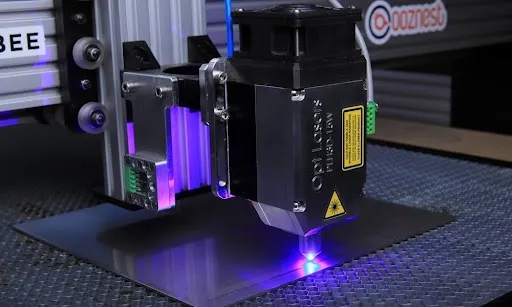
A CO2 laser in the 40W to 60W range is the best overall choice for engraving leather patches. The 10.6 micrometer wavelength that CO2 lasers emit is absorbed efficiently by organic materials like leather, which means the beam converts to heat right at the surface rather than passing through or reflecting off.
This matters because surface-level heat absorption is what creates the contrast you see on a finished leather patch. The laser vaporizes or darkens a thin top layer without burning through the material.
- Hobby users making patches for personal projects or small Etsy shops can start with a 30W to 40W CO2 or a 10W to 20W diode
- Small businesses producing 50 or more patches per week need at least a 40W CO2 with an enclosed workspace
- Commercial producers running hundreds of patches daily benefit from 60W or higher CO2 machines with autofocus and conveyor feed
We've seen makers waste months on underpowered machines before upgrading. The upfront cost difference between a 30W and 50W CO2 is small compared to the time lost running slow, inconsistent jobs.
What Are The Best Laser Engravers For Leather In 2026?
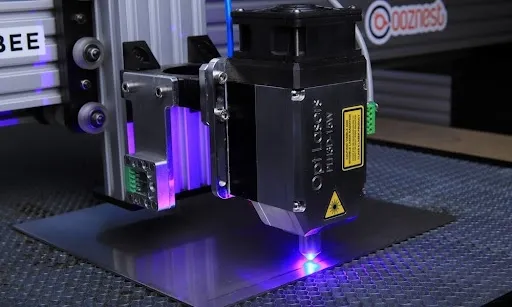
The best laser engravers for leather in 2026 fall into three categories based on production volume and budget. Desktop CO2 machines dominate the small-business segment, enclosed diode lasers serve hobbyists well, and industrial CO2 systems handle high-volume commercial work.
When evaluating any machine, focus on engraving quality, safety enclosure, software compatibility, and vendor support. A machine that engraves beautifully but ships with poor documentation or no warranty creates problems the moment something goes wrong.
| Category | Laser Type | Typical Wattage | Best For | Speed | Engraving Quality |
|---|---|---|---|---|---|
| Desktop hobby | Diode | 10W - 20W | Personal projects, prototyping | Slow | Good on dark leather |
| Small business | CO2 enclosed | 40W - 60W | Etsy shops, hat patch brands | Moderate | Excellent contrast and depth |
| Commercial | CO2 industrial | 60W - 130W | Batch production, wholesale | Fast | Professional-grade consistency |
| Specialty | Galvo/fiber | 20W - 50W | Ultra-fast marking, metal + leather | Very fast | Sharp but shallow |
Desktop machines should include safety interlocks, fume extraction ports, and honeycomb beds. We've noticed that warranty and customer support matter more than brand reputation alone - a responsive vendor can save a stalled production run.
Which Laser Engraver Models Are Most Popular Among Leather Patch Businesses?
We've seen leather patch businesses settle most often on machines in the 40W to 60W CO2 desktop range. These machines balance cost, speed, and engraving quality for runs of 20 to 200 patches per day.
For beginners, enclosed CO2 units with built-in cameras for alignment are the safest entry point. Intermediate users often graduate to open-bed CO2 machines with pass-through slots that accept oversized materials. Professional operations typically run industrial CO2 cutters with rotary attachments for direct hat engraving.
The real-world difference between a budget machine and a mid-range one usually comes down to motion control and beam consistency, not raw wattage. A well-calibrated 40W CO2 produces better patches than a poorly aligned 60W. Many businesses that start with DIY laser engraving eventually switch to ordering custom leather patches once their volume outpaces their machine's capacity.
Looking to get custom leather patches for your brand?
Work with us to create custom leather patches with your logo or any design you want at competitive prices with generous bulk discounts.
How Do You Choose The Best Laser Cutter For Leather?
Start by defining your production volume, workspace size, and budget - these three factors narrow the field faster than comparing spec sheets. A machine that fits your current output and has room to scale is better than the most powerful option you can afford.
Evaluate these before buying:
- Workspace dimensions - the bed should fit your largest patch layout with room for jigs
- Cooling system - air-cooled diodes are simpler, but CO2 lasers need water cooling
- Software compatibility - confirm the machine works with LightBurn, LaserGRBL, or your preferred suite
- Safety features - enclosed designs with interlocks and fume extraction are non-negotiable for leather
A machine that accepts rotary attachments and air-assist kits grows with your business instead of becoming obsolete.
Which Laser Types Used For Leather Patch Hats Work Best?
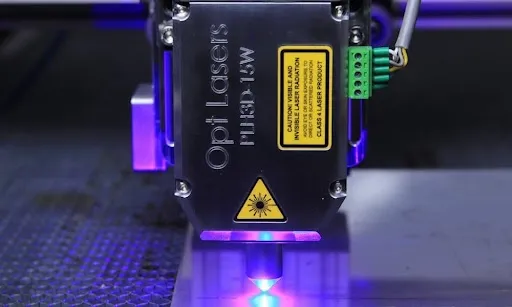
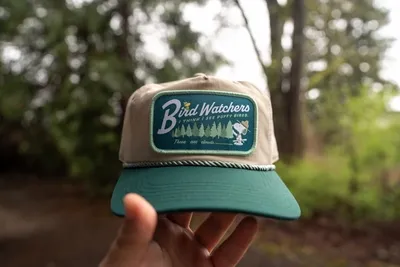
CO2 lasers are the strongest option for leather patch hats because they deliver deep engraving and clean cuts across real leather, leatherette, and suede.
Diode lasers at 450 nanometers work on dark-colored leathers but lose contrast on light hides. They also run significantly slower - we've found a patch that takes under a minute on a 50W CO2 can take several minutes on a 10W diode.
Galvo lasers are extremely fast for surface marking but produce shallow engravings. We've found that most hat patch businesses settle on a mid-range CO2 as the best balance of speed, depth, and versatility.
Work with us to create custom leather patches for jackets and hats. We can bring any design to life in various styles and materials at competitive prices, with bulk discounts available.
Need leather patches for hats and headwear?
Our custom hat patches let you add a professional branded look to caps and beanies in a range of materials and styles.
Learn moreHow Does Laser Engraving Leather Work?
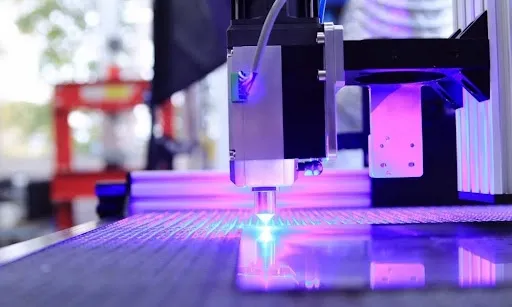
The laser beam focuses on the leather surface and converts light energy into heat. That heat either vaporizes a thin layer of material or chemically darkens it, depending on power and speed settings. A 2021 study in the Journal of Industrial Textiles found that pulsed CO2 laser treatment changes leather surface morphology and wettability, with stronger effects as the number of laser pulses rises.
The contrast you see on a finished patch comes from this surface-level reaction. Vegetable-tanned leather darkens predictably because its natural tannins respond to heat with a rich brown-to-black color shift. Chrome-tanned leather behaves less consistently and can produce gray or greenish marks.
Engraving depth is controlled by power, speed, and focus distance. Lower speed and higher power create deeper marks, while faster passes produce lighter surface engravings. Most patch work stays shallow - just deep enough for visible contrast without weakening the material.
What Type Of Leather Produces The Best Laser Engraving Results?
Vegetable-tanned leather produces the best and most consistent laser engraving results. Its plant-based tanning process creates a surface that reacts cleanly to heat, producing sharp contrast between engraved and unengraved areas.
- Vegetable-tanned - the gold standard for laser patches; darkens evenly, holds fine detail, and smells like natural leather when engraved
- Chrome-tanned - unpredictable color shifts, and heating it can release hazardous fumes and vapors that OSHA guidance says must be vented down to safe exposure levels
- Synthetic and PU leather - engraves with decent contrast but melts easily at high power; requires careful speed-and-power calibration and good ventilation
We've tested many materials on the production bench and keep coming back to vegetable-tanned leather for anything that needs crisp detail and durability. Faux leather works in a pinch for budget runs, but the results are visibly different.
How Do You Select The Right Leather Patch Laser Machine?
Select based on your current weekly output and where you plan to be in 12 months. A machine that matches today's volume but cannot scale creates a costly bottleneck.
For hobbyists making fewer than 20 patches a week, a desktop diode or entry-level CO2 handles the load. Small businesses producing 50 to 200 patches weekly need an enclosed CO2 with reliable fume extraction.
Commercial producers should prioritize speed, automation, and serviceability. Autofocus, camera alignment, and pass-through features improve consistency across long runs.
Research from 2025 studying surface morphology of natural leather after laser exposure found that the heat-affected zone around a perforation reached roughly 330 micrometers at high pulse frequency and narrowed as the frequency dropped - proof that tuned settings matter as much as raw wattage.
What Features Matter Most When Choosing A Leather Patch Hat Laser?
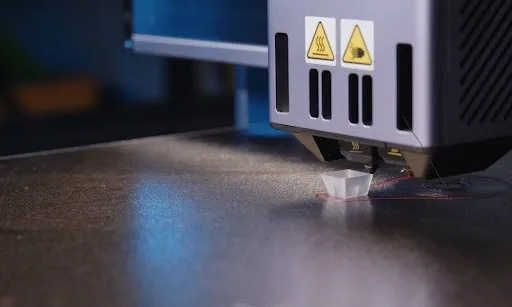
The features that matter most are enclosure design, airflow, software, and upgrade potential. Laser cutting and engraving produce fumes that need active extraction, so a sealed enclosure with ventilation is a safety requirement for leather work.
- Enclosure - protects you from beam reflections and contains fumes at the source
- Airflow - an air-assist nozzle blows debris away and reduces charring
- Software - LightBurn works across most engraver brands; proprietary software should support SVG and DXF imports
- Automation - camera alignment and autofocus save significant time on repeat jobs
Machines that accept rotary attachments let you engrave directly onto curved surfaces like hats. Pass-through slots handle oversized materials. Our guide on how to make leather patches for hats covers sizing and placement before you commit to a setup.
Looking to order custom patches in bulk?
Our wholesale patches come with generous bulk discounts for businesses, teams, and events that need consistent quality across every piece.
What Wattage Laser Do You Need To Engrave Leather?
For engraving leather patches, 30W to 60W is the practical range for CO2 lasers. A 40W CO2 handles most patch work comfortably, while 60W gives you faster speeds and the ability to cut through thicker hides.
Wattage determines how quickly the laser delivers enough energy to mark the surface. A lower-wattage laser can still engrave leather - it just does it more slowly, and slower engraving raises the risk of heat buildup in the material.
For diode lasers, 10W to 20W optical output is the minimum for usable leather engraving. Below 10W, you get faint marks that lack durability. For makers who want professional results without managing laser equipment, custom iron-on patches offer an alternative path.
Beam quality matters as much as wattage. A well-focused 40W beam with a small spot size produces finer detail than a poorly collimated 60W beam.
How Do Laser Power And Speed Affect Results?
Power and speed work together as a ratio that controls engraving depth and contrast. High power with slow speed creates deep, dark marks. Low power with fast speed produces light surface engravings. Finding the right balance is the core skill of laser patch production.
A 2022 study examining laser finishing of leather products looked at how laser energy acts on the leather structure during decoration, with outcomes varying by leather type and processing parameters.
- Excessive power damages leather by burning through the surface or creating charred edges that crumble
- Insufficient power produces faint marks that fade with handling or lack the contrast for readable text
- Speed too slow causes heat accumulation that warps thin patches and discolors the surrounding area
- Speed too fast leaves incomplete engravings with inconsistent depth
We've found that starting at 15 to 20 percent power and 300 millimeters per second on a 40W CO2 gives a safe baseline for vegetable-tanned leather. Adjust from there in small increments.
Want easy-apply patches for your leather goods?
Our custom iron-on patches offer a quick, clean attachment method with durable adhesive backing in any design you want.
Get startedWhat Are The Best Settings For Laser Engraving Leather?
Settings vary by leather type, thickness, and laser power, but a reliable starting point for a 40W CO2 on vegetable-tanned leather is 15 to 25 percent power, 250 to 400 millimeters per second speed, and 300 to 500 DPI resolution.
Always run test patches first. Cut a strip of your exact material and engrave a grid of power-and-speed combinations. This takes 10 minutes and prevents ruining expensive leather.
Common beginner mistakes:
- Starting at full power - this burns through thin leather instantly
- Ignoring air assist - smoke residue settles back onto the surface and stains it
- Using raster when vector works better - solid fills engrave faster in vector mode
Researchers at Jilin University recently showed that tuning laser parameters controls exactly how a CO2 beam transforms a vegetable-tanned leather surface - the same principle applies when calibrating your engraver for patches.
How Can You Improve Engraving Designs On Leather?
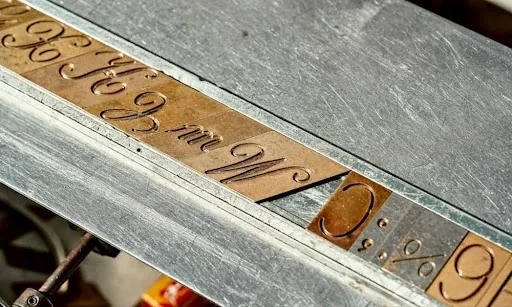
Clean, high-contrast source files produce the best engravings regardless of machine quality. Start with vector artwork in SVG or AI format whenever possible.
- Simplify fine details - lines thinner than 0.5 millimeters tend to disappear on textured leather
- Use grayscale sparingly - leather does not reproduce gradients well; stick to solid fills and outlines
- Adjust line thickness - bolder text engraves more reliably than thin, delicate fonts
Enable overscan to eliminate speed-related banding, and use bi-directional engraving to cut job time in half without sacrificing quality.
Work with us to create custom embroidered patches when your design needs color, texture, or thread detail that laser engraving cannot reproduce. We offer a full range of patch types to match any project.
What Workflow Produces Professional Leather Patch Results?
A professional workflow moves through five stages: design, material prep, machine setup, engraving, and finishing. Skipping any step shows in the final product.
- Design - finalize artwork in vector format and confirm mirror orientation
- Material prep - wipe leather clean, secure it flat on the bed with a jig, and verify focus distance
- Machine setup - load the file, set tested parameters, enable air assist and fume extraction
- Engrave - run the job and monitor the first few seconds for alignment
- Finish - remove smoke residue, apply leather conditioner, and inspect for defects
Batching saves significant time. Cut all leather blanks first, arrange them on the bed, and run the engraving pass on the full batch. If you are making patches for hats, a flat jig keeps alignment tight across dozens of pieces.
How Do You Maintain Quality Control And Scale Leather Patch Production?
Maintaining quality at scale comes down to calibration, standardization, and documentation. Every variable - leather source, machine settings, room temperature - affects the final product.
- Calibrate focus weekly - lens drift and bed wear change focal distance over time
- Document your settings - keep a log of power, speed, and DPI for every leather type you use
- Standardize materials - buy leather from the same supplier to keep results consistent
- Monitor airflow - clogged filters reduce engraving quality and increase fume exposure
We've noticed that the biggest bottleneck for scaling is material handling, not the laser itself. Jigs and batch layouts that minimize repositioning time have more impact on daily output than upgrading to a faster machine.
Work with us to skip the production learning curve entirely. Our custom hat patches and wholesale patches deliver professional results at scale, with a free digital proof and 5 to 7 business day turnaround after approval.
Frequently Asked Questions About Best Laser Engraver For Leather Patches
What Is The Best Laser Engraver For Leather Patches?
A CO2 laser in the 40W to 60W range is the best choice for most leather patch work, offering the ideal balance of engraving depth, speed, and contrast on vegetable-tanned leather.
What Are The Top Laser Engraving Machines For Leather Work In 2026?
The top machines for leather work in 2026 are enclosed CO2 desktop units in the 40W to 60W range for small businesses, and higher-wattage industrial CO2 systems for commercial production needing speed and automation.